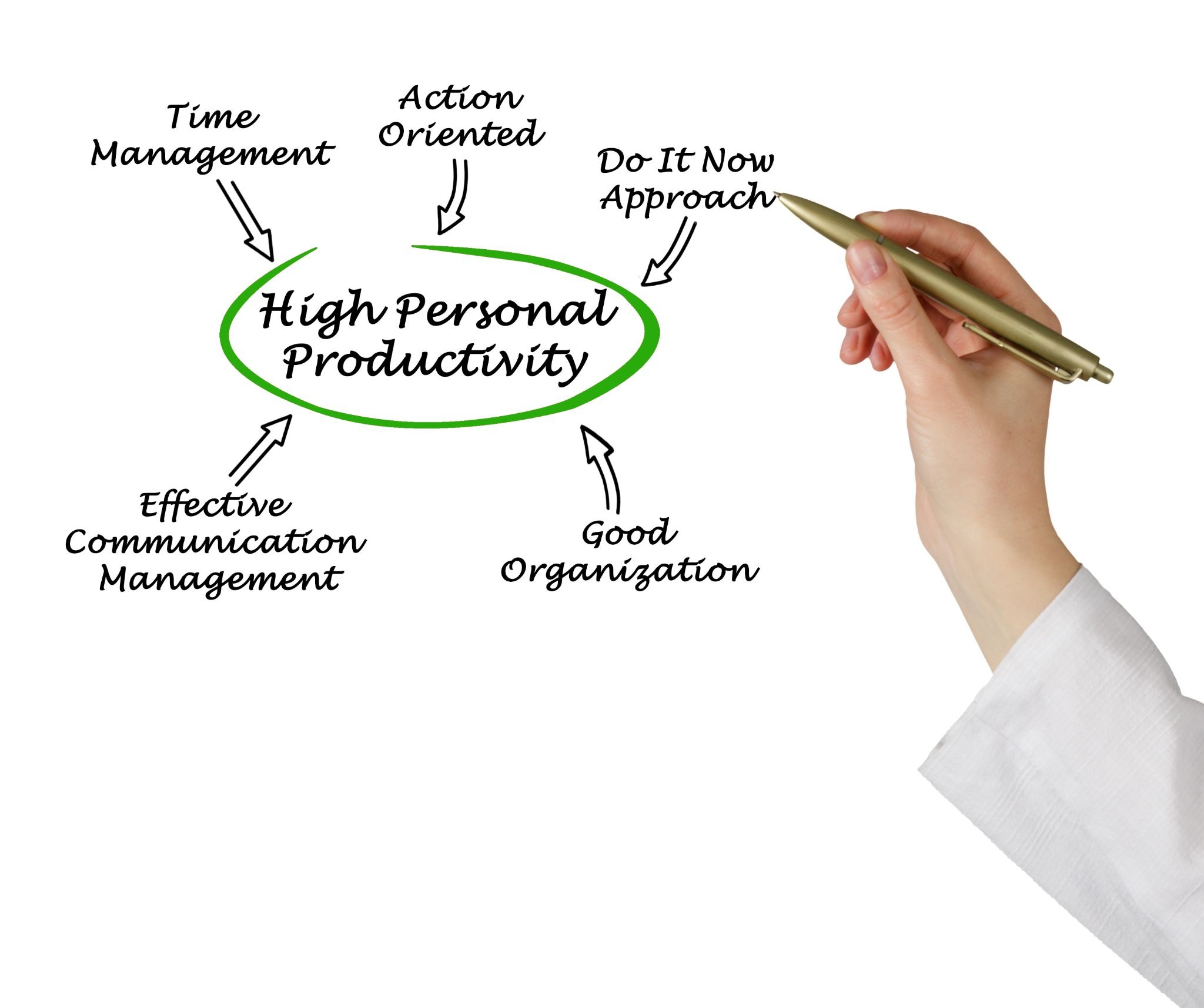
Most people think they have a productivity problem. They download another app, buy a new planner, or watch a motivational video at midnight. But here is the truth: the real issue is not willpower or tools. It is how you see and use your time. Once that changes, everything else follows.
You have probably had days where you were busy from morning to night and still went to bed feeling like you accomplished nothing meaningful. That feeling is not laziness. It is what happens when activity gets confused with progress. Time management productivity is not about cramming more into your calendar. It is about making sure the right things actually get done.
Why Busyness Is the Enemy of Productivity
Being busy has somehow become a badge of honor. People say “I’m swamped” like it proves they’re working hard. But busyness and effectiveness are two very different things. You can spend eight hours replying to emails, sitting in meetings, and ticking off minor tasks, and still have moved no closer to anything that actually matters.
The problem is task-switching. Every time you jump from one thing to another, your brain pays a switching cost. It takes time to refocus, and that lost attention adds up fast. Studies suggest it can take over 20 minutes to fully return to deep focus after an interruption. If your day is full of interruptions, you are never really working at full capacity.
There is also something worth calling “productivity debt.” This is what happens when urgent tasks keep pushing important ones aside. You spend your days reacting instead of creating. The important work, the kind that moves your goals forward, keeps getting pushed to tomorrow. Time management productivity exists precisely to break that cycle and get you back in the driver’s seat.
The Psychology Behind Time-Aware Work
Here is something interesting: tight time constraints actually help most people focus. It is called Parkinson’s Law, and it says that work expands to fill the time you give it. If you give yourself all day to write a report, it will somehow take all day. Give yourself two hours, and you will likely finish it in two hours. That is not magic. That is how the brain responds to boundaries.
There is also the motivational side of things. When you choose your own schedule rather than just reacting to whatever shows up, you feel more in control. That sense of autonomy matters more than most people realize. It directly affects how motivated and engaged you feel throughout the day. Time management productivity is not just a logistical concept. It is deeply tied to how you feel about your work.
Your energy levels also play a role here. Most people have a natural peak, usually in the morning, where their focus and creativity are sharpest. Others hit their stride in the afternoon. The point is not to follow someone else’s ideal schedule. It is to learn from you and protect that window for your most demanding work. Matching tasks to your energy is one of the simplest shifts you can make.
Four Structural Shifts That Change Everything
The first shift is what you might call the Priority Anchor. Each morning, before you check your phone or open your inbox, ask yourself one question: What is the single task that, if completed today, would make this day feel like a success? That one task becomes your anchor. Everything else is secondary. This is different from writing a to-do list. It is about identifying what actually matters and protecting time for it before the day gets away from you.
The second shift is moving from to-do lists to time containers. A to-do list tells you what needs to happen. A time container tells you when it will happen. The difference is significant. Lists invite procrastination because nothing on them is urgent until everything suddenly is. When you assign a specific time slot to a task, you create a commitment. You are not just hoping to get to it. You have decided when. This is one of the most underused time blocking strategies out there, and it works.
The third shift is strategic incompletion. This one sounds strange at first. The idea is that not everything on your list deserves to be finished. Some tasks are low-value, low-impact, and mostly there because they feel productive without actually being useful. Learning to leave those undone, or to drop them entirely, protects your bandwidth for the work that genuinely moves the needle. It takes a bit of confidence, but once you practice it, it becomes freeing.
The fourth shift is building recovery blocks into your day. These are small windows of unscheduled time, maybe 15 to 20 minutes between major tasks or meetings. Most people skip this and wonder why one unexpected phone call derails their entire afternoon. Recovery blocks absorb the overruns. They prevent one delay from cascading into a full breakdown of your schedule.
How Time Management Compounds Over Weeks and Months
One of the most overlooked benefits of strong time management productivity is what happens over time. A single focused hour might not feel like much. But five focused hours a week is 260 hours a year. That is more than ten full days of deep, undistracted work. The compound effect of consistent, intentional time use is enormous.
There is also a psychological benefit that builds alongside the practical one. When you regularly finish what you set out to do, your confidence grows. You start to trust yourself more. That trust reduces anxiety, which then frees up mental energy that was previously spent worrying. Less worry means better thinking. Better thinking means better work. It is a feedback loop worth starting as soon as possible.
Good daily productivity habits also create a sense of stability. When your days have structure, you feel less reactive and more grounded. Creative risks become easier to take because you are not constantly scrambling to keep up. Long-term goals start to feel achievable instead of abstract. That shift in perspective alone is worth the effort of building better time habits.
Common Traps That Undermine Even the Best Systems
Even with a solid approach, there are a few traps that tend to catch people off guard. The most common one is over-scheduling. Packing your day from 8 am to 6 pm with no breathing room looks impressive on paper. In reality, one unexpected meeting or slow-loading document can throw everything off. A schedule with no flex is fragile. Built-in buffer time, and it becomes resilient.
Another trap is confusing planning with doing. There is a very real tendency to spend so much time organizing tasks, color-coding calendars, and refining systems that the actual work never quite begins. Planning feels productive, so it tricks you. Real-time management productivity means spending most of your time doing, not just arranging.
The last trap is rigidity. The best time managers are not the ones who follow a plan perfectly. They are the ones who can adapt when something changes and then get back on track quickly. Overcoming procrastination and staying productive does not require a flawless system. It requires a flexible one that you actually stick with.
Your Time, Your Rules
Coming back to where we started: you do not have a productivity problem. You have a relationship with your time that might need some adjusting. The good news is that you do not need to overhaul your entire life to see results. Pick one of the four structural shifts from earlier and try it for a week. Just one.
When time management becomes a daily practice rather than a rigid system, something changes. Work starts to feel less like a battle and more like a rhythm. You finish more, stress less, and make actual progress on the things that matter to you. That is what real-time management productivity looks like in practice.
Frequently Asked Questions
Q1. How does time management productivity help reduce workplace stress?
When you manage time well, you avoid last-minute rushes and missed deadlines. This reduces anxiety and creates a calmer, more controlled work environment that supports consistent daily output.
Q2. What is the best way to start improving time management for beginners?
Start small by identifying your top priority each morning. Build one focused work block daily. Simple daily productivity habits practiced consistently outperform complex systems that are hard to maintain.
Q3. How many hours of focused work per day is considered productive?
Research suggests that three to five hours of deep, focused work is more valuable than eight distracted hours. Quality of attention matters far more than total hours logged during your workday.
Q4. Can time blocking strategies work for people with unpredictable schedules?
Yes. Even with irregular days, you can block anchor tasks in flexible windows. The key is protecting at least one focused block daily, regardless of how the rest of your schedule shifts.
Q5. How does goal setting connect to better time management productivity?
Clear goals give your time direction. Without them, even a packed schedule can feel purposeless. Linking daily tasks to larger goals ensures your time investments are aligned with what actually matters.